Retail businesses across physical storefronts and online channels are adopting intelligent automation to master how retail companies are using AI
Retail businesses across physical storefronts and online channels are adopting intelligent automation to master how retail companies are using AI. Independent shops, expanding retailers, regional brands, and multi-location operations can now pick up practical tools without fighting painful software rollouts.
Keep your human talent behind the sales desk where personal interaction matters, and direct your team to organize raw information with purpose-built daily software without delay so inventory doesn't get bottlenecked. Smart retailers let systems draft initial copy, uncover underlying patterns across catalog records, process incoming receipts, and remove repetitive administrative tasks from daily schedules.
Restructure what you offer buyers, your baseline economics, internal capabilities, and software stacks directly around automation before you roll out new storefront programs. Over the next five years, durable commercial advantages will belong to full architectural rebuilds, while operations that treat intelligent software as a cosmetic bolt-on will lose ground.
How Retail Companies Are Using AI
Tracking how retail companies deploy modern automation shows that physical storefronts and online channels can't protect their margins without practical, grounded tools. Retailers unlock real value when you keep human staff stationed at the sales desk while directing automated systems to organize raw data, draft initial copy, categorize updates, and uncover underlying patterns across transaction records. Remove repetitive tasks from your daily schedules so your frontline team can focus directly on building authentic customer relationships.
Expanding retailers systematically rebuild their core buyer promises, unit economics, internal skills, and technology foundations directly around artificial intelligence to secure permanent operational advantages across every sales channel. Align your internal operating capabilities squarely upon intelligent systems right now. Over the next five years, real commercial penalties will hit businesses that merely treat automation as an extra plugin on top of existing setups.
How Retail Companies Are Using AI in Stores
On the sales floor, routine operational duties lean heavily on computer vision and agentic workflows to cross shelf auditing and gap detection off the daily staff checklist. Existing cameras track on-shelf inventory continuously, while connected sensors translate physical foot-traffic patterns into precise staff rosters.
Schedule your floor associates directly against those measured traffic counts so they can dedicate their paid hours entirely to guiding active shoppers. Over time, these storefronts evolve into phygital spaces steered by real-time digital twins, alongside sentiment-aware algorithms that fine-tune visual displays or roll out custom product variants. Push everyday checkout transactions and supply chain handoffs into automated background systems, splitting your retail business into two distinct operating models. Physical stores then function as high-touch showcases where direct human attention and verified authenticity set the luxury standard.
Computer Vision Shelf Monitoring
The deployment of retail ai vision solutions across your aisles provides store leaders with live, accurate inventory counts that lift daily floor efficiency. Frame rate requirements remain modest, with 5 to 10 FPS proving sufficient since shelf replenishment audits do not require high-speed tracking. Your current camera setup can run these tools without costly hardware swaps, provided your devices meet baseline technical specifications:
Resolution: 1080p (2MP) minimum per aisle camera, providing roughly 30-50 pixels per foot at shelf distance.
Frame rate: 5 to 10 FPS is sufficient because routine shelf replenishment audits do not require high-speed tracking.
Stream protocol: An RTSP/ONVIF-compatible IP stream that can feed into an on-premise edge gateway or secure cloud ingestion point.
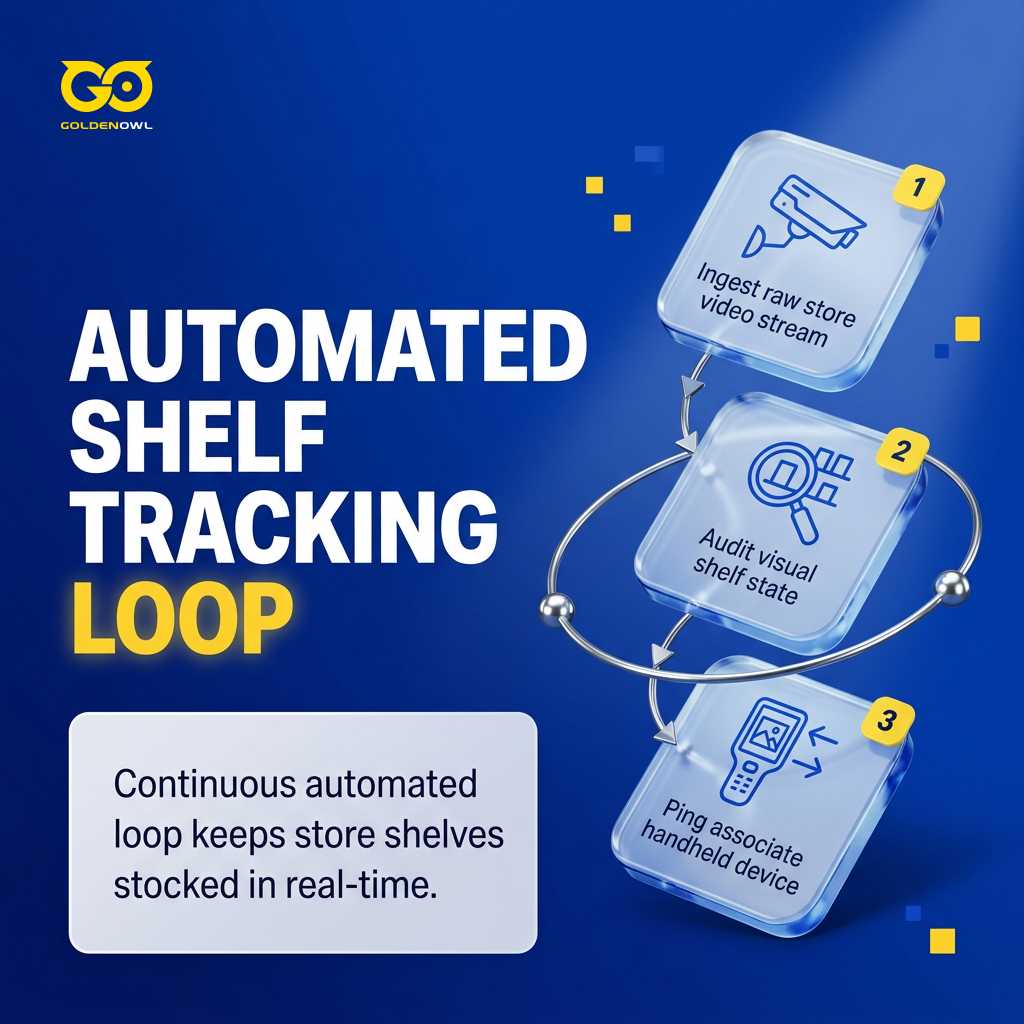
As soon as your video setup clears those benchmarks, automated shelf tracking operates through a continuous three-step loop:
Ingest raw video streams from existing store CCTV directly into Vision Warehouse. Rather than relying on manual tagging, the software applies natural language search directly across recorded video. A manager can prompt the system to send an alert whenever any shelf in the beverage aisle is more than 20% empty.
The AI continuously audits the visual shelf state against your digital inventory records.
When the system detects an inventory discrepancy, the software automatically pings an associate's handheld device with a photo of the gap and directions to the replacement stock.
Live enterprise rollouts demonstrate measurable operating returns the moment you bring AI retail solutions onto physical store floors. For instance, Lush Lens combines Vertex AI with Cloud Storage to recognize unpackaged items right at checkout. That process trims checkout lines and curbs water waste, while competing retail chains deploy Agent Platform Vision Warehouse to run plain-text searches like "Find blue paint spill in Aisle 4" over PB-scale video storage with automated instant event triggers.
Mobile Associate Standard Operating Procedure Assistants
The replacement of paper binders with mobile AI tools speeds up daily store routines while visibly sharpening the quality of frontline customer assistance.
Using Gemini Enterprise app you can build a Store Associate Agent accessible on mobile devices grounded in your company's internal Standard Operating Procedures (SOPs) and real-time operational data.
Floor associates talk directly into mobile devices via voice-to-text, resolving immediate customer questions without ever leaving the sales floor. They can pull up instructions for unreceipted damaged returns, check off a delivery-receiving checklist, or instantly review morning shift notes left by the footwear manager.
AI reorganizes unwieldy compliance binders, raw logs, and technical manuals into compact operational assets that store associates can pull up during a shift:
A one-page opening checklist
A short guide to processing returns
Product knowledge cards
New-starter quizzes
Customer-service role-play scenarios
A delivery-receiving checklist
A supplier-manual summary
Simple instructions for an unfamiliar process
These frontline workflows rely strictly on validated operational documents owned and updated directly inside your enterprise. Feed your established company guidelines into the system to streamline returns, rather than letting algorithms invent company policy from scratch. The software does more than reformat manuals, clarify complex wording, and quiz staff; it assists execution, but it must never invent rules for legal compliance, safety protocols, product warranties, customer refunds, or worker employment terms.
Automated Spatial Quoting
Businesses selling installation-heavy goods like roofing, storage sheds, or solar arrays can calculate project pricing automatically using aerial spatial analysis:
When a customer submits their property address, the AI connects to Google Earth Engine's high-resolution aerial imagery and applies computer vision to measure roof area, pitch, and shading from nearby trees.
An Agent Platform agent takes these physical measurements and cross-references them against your current labor rates and material costs.
Within seconds, the software generates a precise, 3D-visualized sales quote.
Automated site calculations cut out the recurring expense of dispatching technicians for preliminary on-site physical inspections. Sales reps then spend their working hours exclusively on vetted prospects who already accepted that initial automated quote.
Inventory Planning
When you feed local weather patterns, live global trends, community events, school breaks, and seasonal shifts into your software, store forecasting gets genuinely reliable. Because an automated forecast is only a probability, you still want human buyers reviewing massive supplier purchase orders whenever financial exposure demands deliberate oversight.
Rely on software alerts to catch sudden spikes in weekly sales velocity, specific sizes running thin, inventory gaps, or vendor shipment bottlenecks long before your shelves go bare. As a reminder, monitor slow-moving catalog lines with that exact same discipline. Across 30, 60, or 90 days, quietly ageing stock inevitably stalls out, tying up cash and prime retail space as customer interest drifts elsewhere.
Pulling off these predictive stocking routines depends entirely on strict physical data hygiene across your whole company. When register receipts, online orders, store audits, and shelf counts sit trapped in isolated tools and outdated spreadsheets, automated purchasing recommendations fall apart fast. Build an integrated POS setup that leans on tools like Inventory Scan to record sales, customer returns, supplier deliveries, store transfers, and stock adjustments before generating replenishment guidance.
Insist on clean item records, standardized SKUs, barcode integrity, and verified counts rather than staring at fancy reporting screens running on flawed figures. With accurate baseline counts, you can rebalance stock across locations, moving surplus units out of overstocked shops into storefronts that are missing sales before you cut fresh purchase orders.
Automating administrative friction turns category managers into agile mini-CEOs. Delegate demand forecasts, price suggestions, competitor tracking, and supplier negotiation summaries directly to software. That move lets merchandising teams step away from daily stock maintenance to shape big-picture strategy, curating assortments and setting pricing rules that drive category performance.
Catalog Management
Run automated catalog operations to turn messy supplier feeds into clean storefront records. Hike figures out schema conflicts by reading file headings and proposing column maps before anyone commits changes. Set up an AI-assisted import workflow that links mismatched header labels for identical fields while catching missing data across irregular spreadsheets before products go live. Across multi-vendor catalogs, modern platforms use fuzzy matching and multimodal entity resolution to spot identical specs and photos when supplier writeups disagree. The ingestion engine folds those parallel feeds into one deduplicated golden record for every SKU, pulling the best photo and the most accurate description.
With that golden record locked down, you can scale copy generation across your entire catalog without sacrificing baseline quality. Route your requirements into a multi-agent review setup where one agent writes the draft and another checks every detail against the technical spec sheet. Set strict prompting rules covering facts, customer personas, character limits, tone, and brand guardrails so you avoid generic filler, while Hike generates draft text directly from highlighted product traits. Keep human review in the loop throughout the process to verify product claims and protect your retailer voice.
At enterprise scale, Wayfair refreshes product attributes at 5x speed to capture operational savings, while Miinto consolidates redundant listings across its merchant base. To speed up catalog production through dynamic visual enrichment, Zalando tapped into these automated workflows to generate 1,800 image variants in minutes.
Enterprise Deployments of Retail AI Solutions
The market sentiment around retail AI solutions jumped this year, backed by hard executive data. In the AI Radar study from BCG surveying 2,400 global leaders, four out of five CEOs reported rising confidence about eventual ROI. Nearly every executive in that same group expects autonomous AI agents to deliver measurable operational returns by 2026.
Full financial payback takes a 3-5-year timeframe because you have to rewire internal workflows, update legacy tech stacks, and wait for actual employee adoption. You need to reset investor expectations around those longer timelines, pairing that breathing room with disciplined performance tracking and consistent project execution.
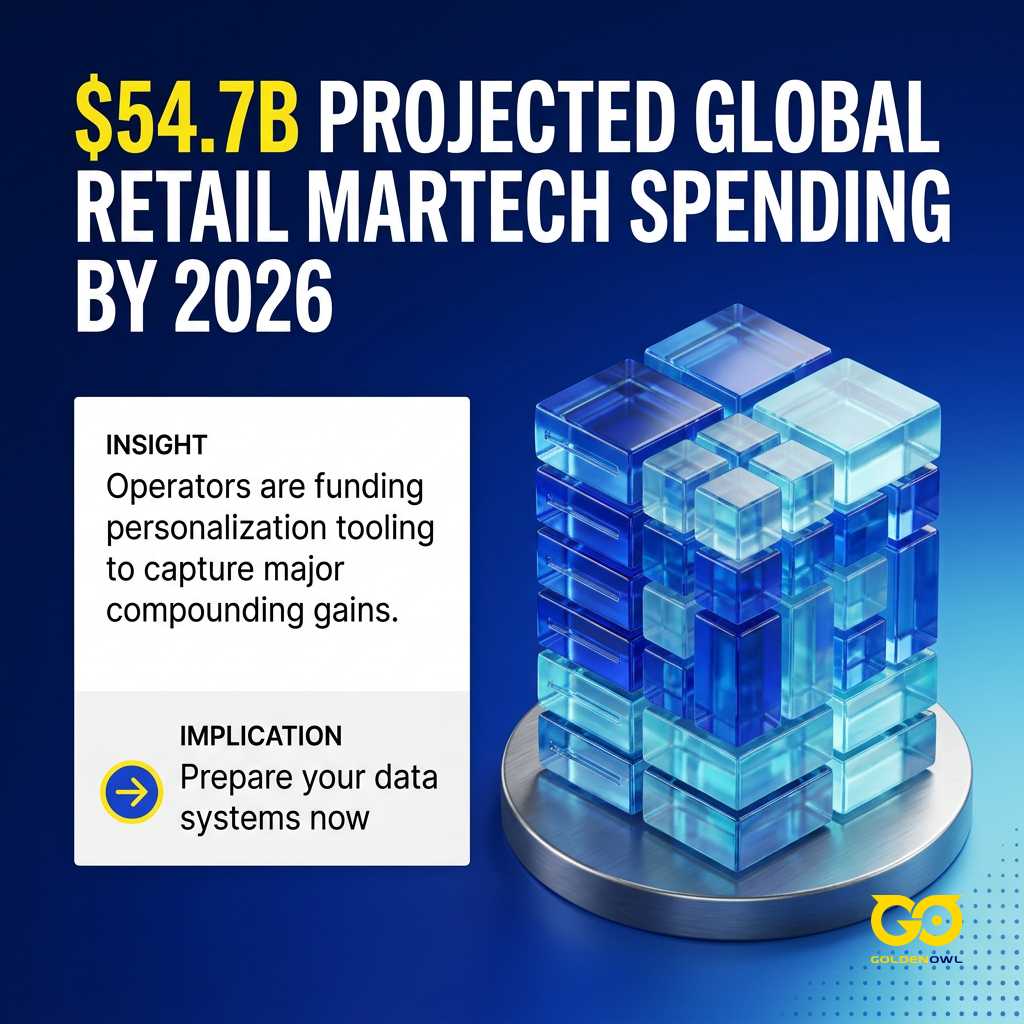
Spending patterns clearly match that patient approach. Research from Coresight Research projects that global retail MarTech spending will reach $54.7 billion by 2026, climbing at a 12.2% annual growth rate through 2030. Operators who fund personalization tooling right now put themselves in position to capture major gains as those automated workflows compound across their customer base over time.
If you want to keep internal momentum alive, you have to prove tangible operational wins early. Introduce 2-3 prominent implementations spanning diverse units such as markdown optimization, automated pricing, or recruiting workflows, while thoroughly rebuilding 1-2 core business functions with fresh software, revised operating roles, and clear performance scorecards.
Mass Merchandising Deployments
Large department stores and big-box brands illustrate how retail companies are using AI to rework both digital storefronts and physical floor operations:
The Home Depot The Home Depot launched Magic Apron, an assistant that works 24/7 to give customers step-by-step DIY project guides and targeted product recommendations.
Target Target relies on Google Cloud infrastructure to run smart merchandising across the Target app, Target.com, and personalized promotional deals for Target Circle.
Carrefour Taiwan Carrefour Taiwan built AI Sommelier directly into its mobile storefront, helping retail shoppers pick out bottles of wine that match their individual tastes.
Dunelm Dunelm teamed up with Google Cloud to upgrade its web catalog, using generative search tools that help home-goods shoppers track down the exact items they want without friction.
Follett Follett taps visual content systems and automated delivery tools to generate crisp, high-converting digital shopping imagery at scale across its entire web catalog.
Global Apparel Marketplaces
When catalog scale gets unmanageable across thousands of third-party merchants, operators like Mercari, Zalando, Wayfair, and Miinto turn to automated enrichment, visual processing, and smart chat tools:
Marketplace
AI Technology & Use Case
Operational Outcome
Mercari
Google AI customer service integration
Expected 500% ROI and a 20% reduction in staff workload
Zalando
Cloudinary on AWS visual content intelligence
Generated 1,800 image variants in minutes and saved 5-7 days of production time
Wayfair
Automated product catalog attribute enrichment
Updates product attributes at 5x previous speed, resulting in substantial savings in operational costs
Miinto
Vertex AI Vision entity resolution
Recognizes and consolidates redundant multi-vendor product entries into unified golden records to lower overhead
These merchant rollouts prove that automating asset generation and multi-seller SKU cleanup cuts overhead immediately, taking manual catalog maintenance entirely off your team's plate.
How to Implement AI Solutions for Retail
Bring in an external ai solutions company only when you're fully ready to align your commercial strategy, core technical architecture, and day-to-day frontline habits.
Define your strategic AI endgame
Decide upfront whether you're building a destination or an evaluation layer, then lock down your CVP so you protect customer share-of-wallet while algorithmic discovery completely changes how people shop.
Set an enterprise AI roadmap
Map out the exact retail workflows where an enterprise AI roadmap can create real lifts in frontline productivity, fulfillment turnaround, or customer outcomes across your store footprint. Price out your first-year budget across data, platforms, and software, then lock in your 3-5-year ROI target so investor expectations stay grounded right from day one.
Lift your workforce’s AI fluency and adoption
Train your frontline store teams to run enterprise AI systems safely, driving adoption through direct hands-on practice, active leadership, and clear role-based routines that weave software assistance right into regular employee shifts.
Build the foundation for enterprise-wide AI
Put shared core infrastructure, strict operational guardrails, and ai retail security solutions in place as safeguards against fraud and threats, letting merchant teams roll out early automated workflows without opening up company-wide security risks.
Roll out select big bets
Focus on 2-3 flagship big bets like automated pricing, markdowns, HR support, or talent acquisition to prove tangible value across business units. Once those prove out, overhaul 1-2 primary business functions by pairing machine-assisted workflows with updated frontline roles, practical software, and fresh operational metrics.
Data Readiness
AI solutions for retail are only as good as the data feeding them, which means you need dependable real-time inventory counts, solid architecture, and stable infrastructure. Decades of underinvestment leave most store chains fighting fragmented databases, siloed warehouses, and low-grade records. Stack-rank your data cleanup and connectivity by expected ROI, leaning on practical workarounds whenever your teams run into broken catalog files.
Fragmented, low-quality catalog data regularly prevents modern retail algorithms from generating dependable real-time inventory insights or executing accurate commercial decisions.
Before you hook any model up to your product catalog, audit and scrub three precise operational record areas across all active SKUs:
Attribute standardization: Force fields like size, color, and physical dimensions into uniform naming conventions instead of mixed supplier formats.
Mandatory spec completeness: Flag catalog SKUs missing fundamental material, warranty, or compatibility metadata, because language models cannot index sparse records.
Inventory status accuracy: Confirm that in-stock boolean flags track actual physical shelf quantities rather than lagged end-of-day warehouse batch files.
Phased Pilot Rollout
Skip massive enterprise transformation blueprints and pick off one annoying operational headache that produces an immediate practical win, running a four-week rollout to test automated tooling inside a single department without operational risk.
Week 1: Find the busywork
Before putting down capital during Week 1, inventory every repetitive manual task your store staff handles, isolating four rule-based candidates like drafting descriptions, cleaning spreadsheets, summarising reports, or answering buyer questions. Picking exactly one contained operational workflow for your initial test beats running ten speculative pilots.
Week 2: Test it safely
Feed your chosen automation a small, non-sensitive sample batch during Week 2 to gauge baseline speed and output quality. Benchmark completion turnaround, drafting accuracy, and potential risks against existing manual routines, noting every step that requires explicit human sign-off.
Week 3: Make it repeatable
Lock down your prompt structure, input templates, and review protocols throughout Week 3 based on what produced the cleanest output, setting clear team ownership for data checks, fallback steps, and mandatory human handoffs. A dependable frontline routine always builds more lasting retail value than a flashy software demo that falls apart the moment it leaves a controlled setting.
Week 4: Measure the value
Assess the finished pilot during Week 4 against three practical questions: did it recover staff hours, protect catalog accuracy, and keep from piling new operational overhead onto store associates? Keep the workflows that show clear labor savings, calibrate anything with mixed outcomes, scrap tools creating fresh friction, and move straight to your next backlog item.
Restricting automated copy generation to internal back-office drafting during pilot deployments reliably stops costly sync errors before unverified content ever hits public digital storefronts.
Scale your early wins across 2-3 flagship AI use cases like automated pricing, markdowns, HR support, or talent acquisition. Tap into those initial gains to modernize 1-2 core business functions, equipping frontline staff with automated routines, practical software, and fresh operational metrics.
Autonomous Retail Horizons
We'll watch commercial retail shift away from reactive setups toward an agentic, self-directed operating model over the coming years.
Agentic Commerce
Agentic Commerce Ecosystem Modern commerce is stepping into an agentic era where personal AI representatives interact and complete transactions straight against merchant databases. That shift ensures customers won't rely on standard website storefronts, turning instead toward clean, machine-readable data.
Phygital Store Environments
Physical retail stores are setting up connected environments that blend automated telemetry directly with high-touch human interaction:
Physical stores may evolve into "phygital" hubs, fully autonomous environments optimized by real-time digital twins and sentiment-aware AI that can adjust everything from store layouts to personalized product designs on the fly.
Vision AI and agentic workflows help automate routine work. Robots and cameras can handle both shelf auditing and stock gap detection.
Retailers are also deploying Agent Platform Vision Warehouse for physical store intelligence, searching vast amounts of CCTV or on-shelf image data to audit inventory or safety through text-to-video search supported by PB-scale storage and real-time event triggers.
Ultimately, analyzing how retail companies are using AI reveals that storefronts will be reinvented as high-touch galleries where human empathy and "verified authenticity" become the ultimate luxury commodities, reinforced by tools like SynthID to watermark authentic content.
Share this page
Table of Content
Subscribe to Golden Owl blog
Stay up to date! Get all the latest posts delivered straight to your inbox
Instead of relying on slow manual audits, retail AI vision solutions scan visual feeds from overhead cameras, display shelving, and digital product listings to trigger immediate operational fixes.