Retail AI Vision Solutions for In-Store Operations
Artificial Intelligence
Retail AI Vision Solutions for In-Store Operations
Sep 14, 2026
about 12 min read
Instead of relying on slow manual audits, retail AI vision solutions scan visual feeds from overhead cameras, display shelving, and digital product listings to trigger immediate operational fixes.
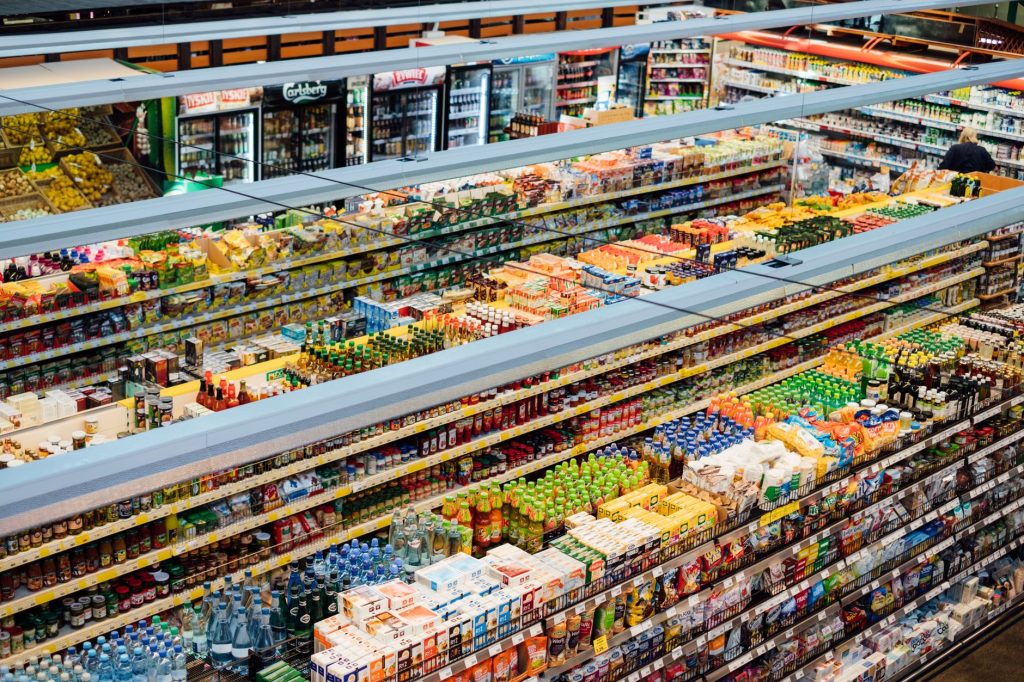
Brick-and-mortar retail networks bleed revenue under passive ceiling cameras.
Unchecked margin leaks quietly drain physical store locations through empty shelf displays, jammed checkout lines, and constant inventory shrink. Instead of relying on slow manual audits, retail AI vision solutions scan visual feeds from overhead cameras, display shelving, and digital product listings to trigger immediate operational fixes.
Equip on-site teams with these vision tools to maintain continuous oversight across the entire sales floor. The system translates raw camera streams into concrete store tasks by tracking on-shelf stock counts and catching theft as it happens. Operators can pipe those instant triggers straight into front-end operations to shorten checkout delays and map customer paths through every aisle. Grand View Research evaluated this commercial sector at roughly $1.66 billion in 2024, forecasting an expansion to approximately $12.56 billion by 2033 on an annual growth rate near 25%.
Retail AI Vision Solutions for Inventory Management
Global Inventory Losses
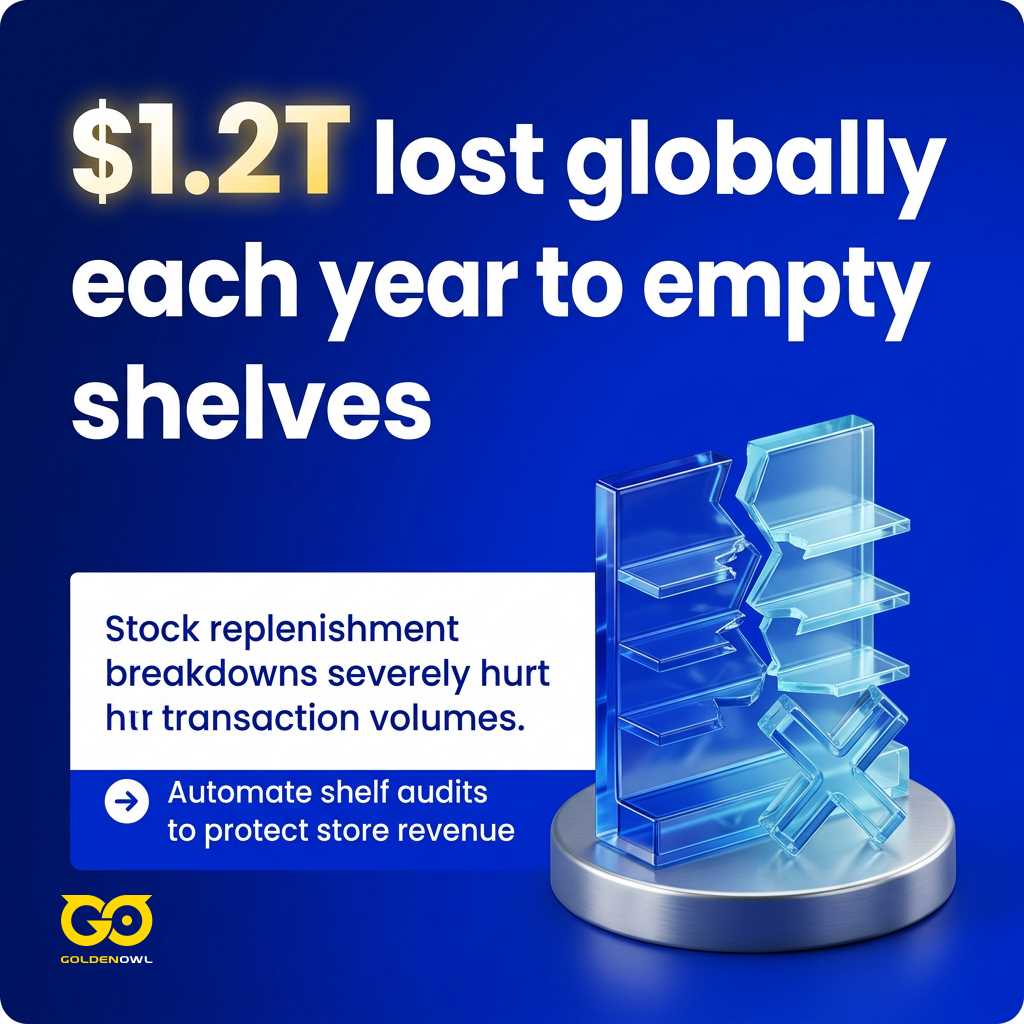
Store operators forfeit around $1.2 trillion each year to empty shelves across physical storefronts, based on data published by IHL Group tracking supply replenishment breakdowns. Stocking surplus merchandise locks up working capital and sparks severe price cuts, whereas bare displays kill off transaction volumes across every major product category.
Sensor Fusion Architecture
Sensor fusion ties overhead camera feeds directly into RFID scanners, shelf weight sensors, and real-time register signals. If you're testing whether visual tracking holds up under dense foot traffic down packed aisles, these connected hardware inputs decide actual operational accuracy.
Edge Computing Integration
Edge computing runs raw video streams directly on local appliances right inside the building, cutting bandwidth demands while dropping processing latency down to single-digit milliseconds. Handling visual data on site instead of pinging remote cloud clusters lowers monthly server bills and catches missing merchandise before inventory records drift.
Automated shelf monitoring
Computer vision takes over the manual shelf audits that store personnel spent hours conducting on foot during regular daily shifts.
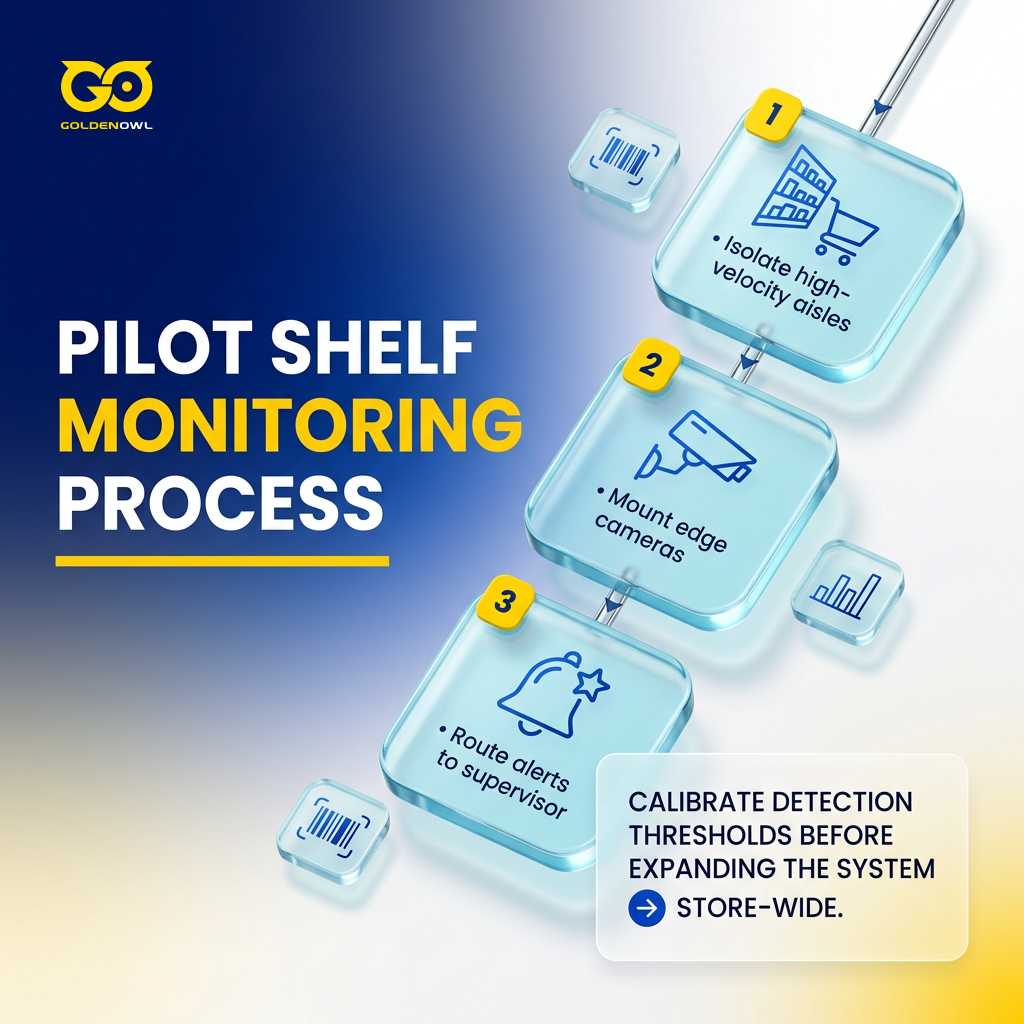
Isolate 1-2 high-velocity aisles (such as packaged beverages or paper goods) where stockouts occur frequently and visual contrast is high.
Mount fixed overhead or edge cameras focused exclusively on top-selling SKUs rather than full-store coverage.
Route restocking alerts to one designated floor supervisor for 30 days to calibrate facing detection thresholds before expanding store-wide.
Automated shelf tracking depends on continuous optical inspection tools running right across the active sales floor:
AI cameras, fixed overhead or mounted on robots, count products, detect empty facings, and alert your staff to restock before losing a sale.
Vision automation verifies that shelf price tags match physical displays and your central POS record.
Automated vision systems track inventory movement in real time, flagging discrepancies between recorded ledger counts and physical shelf stock to isolate theft from inventory management issues.
Across an estate of more than 4,700 locations, one massive retail chain rolled out demand forecasting models throughout its logistics network to balance inventory. The software forecast store-specific purchasing patterns by combining register tallies, localized weather reports, community event dates, and neighborhood online chatter. Connect your replenishment pipeline directly to automated delivery schedules so store restocks land the moment shopper purchasing surges. That implementation cut out-of-stock events by 30%, slashed excess stock by 25%, and pushed inventory turnover up by 20%.
Inside sprawling home improvement warehouses, a national brand mounted optical sensors up in the ceiling rafters to spot misplaced goods, aisle spills, physical hazards, and active shoplifting. Aside from detecting damaged packages and irregular foot traffic, the system alerts associates to products dropped in wrong departments, recovering the full upfront investment within year one by preventing merchandise waste and keeping counts accurate. Overall store shrinkage dropped 15%, while floor safety accidents fell 30%.
Planogram compliance
Auditing physical shelf setups across hundreds of storefronts reliably breaks down if you're relying on manual inspections. Computer vision fixes this operational breakdown by snapping aisle photos, checking physical product placement against schematic layouts, grading adherence to the digital planogram, and counting item facings alongside total brand shelf share down every aisle.
Fixed ceiling cameras check promotional compliance across every single location. Instead of waiting for regional reps to audit a tiny sample of stores, vision systems inspect endcap footprints across every branch, protecting campaign returns. Put mobile store robotics on the floor each morning to cross-check discount placards against merchandising schedules, which frees store teams from auditing price tags tag by tag across every aisle. Once software queues up restocks automatically and flags misplaced items on the spot, your floor associates can spend their hours assisting store shoppers instead of chasing down physical inventory chores.
Customer Behavior Analytics
Past automated restocking routines, computer vision turns raw customer movement into immediate merchandising decisions on the floor. When you combine shopper dwell times, hesitation markers, and movement paths with point-of-sale receipts, your heat maps quickly expose which aisles draw heavy physical browsing without generating a single transaction at the register.
Shift your physical displays around these movement numbers so you can wipe out dead zones across the floor. Track customer actions against your planogram rules, confirm whether promotional endcaps hit their revenue targets, and tie every floor plan revision straight to cash register sales matched against shelf dwell time.
Footfall tracking
Passerby Conversion Analysis Point external cameras at your entrance to log sidewalk foot traffic and visitor walking paths. The vision system calculates your exact storefront conversion rate, giving operators clear evidence on which marketing pushes pull shoppers through the door and which window displays push prospective buyers away.
Occupancy Threshold Compliance Mount vision sensors over your front doors during busy weekend rushes to count incoming shoppers automatically, keeping total patron counts strictly aligned with local maximum occupancy laws.
Heat mapping
Optical cameras generate live heat maps by tracking shopper motion, color-coding foot traffic density across each aisle to show where crowds gather:
Real-time color-coded heat maps represent foot traffic density across different store zones, visually represented through varying shades.
Live spatial tracking detects densely visited sections, inactive dead zones, and physical congestion points across retail floor plans.
Identification of high-traffic aisles that fail to convert browsing shoppers into paying customers when cross-referenced against POS records.
Instant merchandising shifts, triggering modifications to promotional displays, physical signage adjustments, or merchandise substitutions when specific featured displays underperform.
Check these optical heat maps in pilot aisles before you rebuild an entire department, tracking how shoppers navigate each revised shelf layout. When a display sits dead and draws no physical interaction, your managers can swap out the merchandise immediately.
To stop anomalous shelf lingering from skewing your traffic data, configure spatial models to limit tracked interaction windows to 5-10 minutes:
Exclude employee uniforms or badges: Configure vision models to filter out floor staff attire or lanyard colors.
Cap dwell-time thresholds: Cap tracked interaction zones at 5-10 minutes, because shoppers rarely linger continuously at a single shelf facing unless engaged in an obvious anomaly.
Crowd analysis
Vision models monitor customer counts and checkout queues around the clock, pushing automated alerts into your labor scheduling software so supervisors open registers before backups form. The moment front-end customer volume thins out, cashiers step away from the registers and head back into the main grocery aisles to restock shelves. Tracking live movement instead of relying on periodic headcounts keeps your hourly payroll tied directly to actual floor traffic.
Checkout Automation Solutions
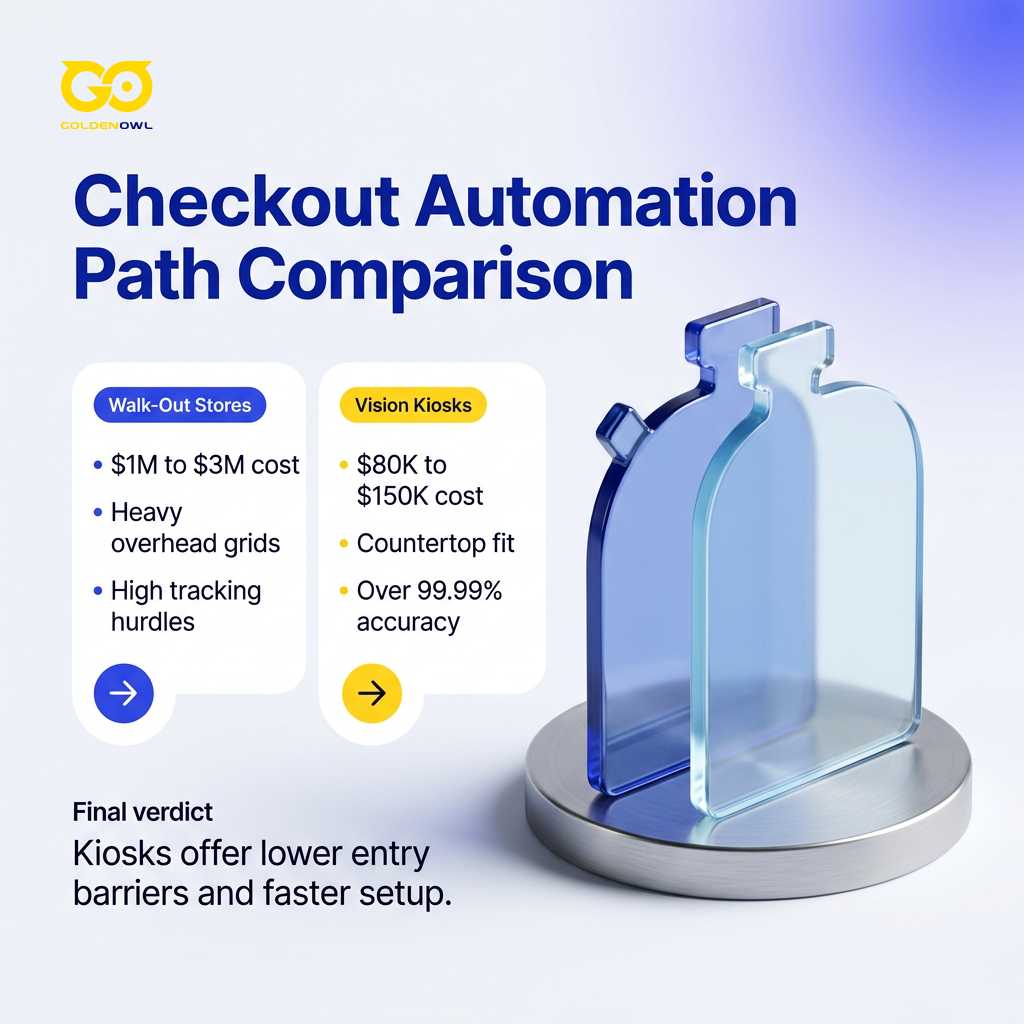
Cutting manual register staff through automated computer vision leaves you deciding between two distinct paths, weighing full-room sensor networks against compact countertop vision kiosks.
Building out fully cashierless walk-out stores demands between 1 and 3 million dollars in capital investment per location, relying on overhead camera grids and shelf weight sensors to track shopper traffic. When customer density climbs, tight store layouts and tracking occlusion trigger severe operational hurdles for these sensor arrays. Cheaper equipment now encourages hybrid setups alongside existing store footprints, but blanketing an entire ceiling remains a heavy infrastructure undertaking.
Installing countertop vision kiosks costs from $80,000 to $150,000 while fitting directly into your current front end. They scan product details right away using multi-camera trays, so you don't have to rebuild your existing store architecture. Delivering over 99.99% accuracy across 60,000 SKUs lets these countertop units clear checkout bottlenecks and reduce store payroll, skipping the tracking snags and ceiling grid builds of full walk-out systems.
Store Operations Solutions
Quick-serve and retail operators don't just watch checkout counters to spot bottlenecks; they tap camera feeds to anticipate line lengths and reassign staff in real time. That shifts store management past reactive register shuffling and into automated, enterprise-scale labor allocation. Starbucks runs its Deep Brew platform across thousands of locations to dial in shift staffing. Map your foot traffic patterns against past volume, community events, local weather, and active social media chatter. Building smarter schedules off those signals helped Starbucks cut store labor expenses by 12% while improving customer wait times by 20%. Running automated task prioritization off shelf inventory, foot traffic, and day-to-day store demands handed Macy’s a 15% gain in operating efficiency and an 18% bump in employee productivity.
Return on Investment
Map out your investment model by weighing recovered revenue, prevented shrinkage, and reclaimed floor hours against hardware outlays, systems integration, and ongoing model maintenance. Catching out-of-stock items and checkout bottlenecks in real time instead of reviewing them days later on an operations log drives concrete returns across daily store routines, floor sales, and loss prevention. Most single-use-case pilots reach full payback within 6-18 months.
Improved on-shelf availability
Protect product availability on the sales floor by letting automated camera feeds flag depleted shelves before shoppers notice. Even minor restocking gains deliver massive financial returns when measured against the roughly $1.2 trillion lost worldwide every year to empty shelves.
Higher staff efficiency
Employees shift their attention to customer service and active selling the moment you eliminate manual inventory scans, boosting store margins and gross revenue simultaneously. Vision-based efficiency relies on this specific staffing reallocation as its primary engine.
Faster checkout and fewer returns
Routing customer queues into autonomous lanes cuts register wait times, while interactive virtual try-on guides shoppers to the right purchase upfront and directly reduces merchandise returns.
Foundations of Retail Computer Vision
Teaching software to parse store camera streams at scale turns ordinary surveillance feeds into automated operational triggers that track shopper footsteps, spot products, and flag empty shelves or walked merchandise. As part of broader retail ai solutions, retail operators now put roughly 15% of their IT budgets into retail AI vision solutions that treat floor cameras as live telemetry. That shift in capital expands the retail computer vision market from $1.66 billion in 2024 to $12.56 billion by 2033, representing a compound annual growth rate near 25%.
Converting visual pixels into floor execution happens across four sequential steps that wire live video directly into daily store workflows. Teams start with capture, pulling video from overhead cameras, shelf robots, smart mirrors, and mobile devices into detection models that register customer paths, dwell times, individual items, and compliance rules. From there, compare those visual feeds against shelf planograms to audit layout and catch missing or misplaced stock. Systems then fire off automated dispatches across store software, routing restock tasks to employee handhelds, shifting staff across zones, and billing frictionless checkout accounts on exit.
The economic payoff divides by operating model. High-volume food, drug, and mass retail can unlock substantial value up to $280-650B by eliminating labor-heavy choke points like picker routes, shelf checks, and task dispatch. Specialty retail unlocks up to $230-520B across its value chain by steering visual data toward merchandising, assortment, logistics, and lifecycle management. In those stores, merchant teams combine visual telemetry with predictive analytics to optimize inventory, markdowns, and granular demand forecasts for fast-expiring goods.
Frequently Asked Questions
How much does it cost to implement computer vision in retail?
Capital requirements scale directly with installation scope across your physical footprint. Outfitting an individual retail site for tracking products on display generally runs $50,000 to $150,000, alongside $80,000, $150,000 for self-checkout oversight, $100,000, $400,000 for multi-store analytics setups, and fully autonomous store environments requiring between $1 million and $3 million for each site. Expect annual maintenance contracts to tack on roughly 15-25% of the initial installation budget annually. Check your camera density across every aisle and calculate your total store count before committing to hardware. Before sizing any pilot, decide whether your stores will run inference locally on edge units or push feeds out to cloud infrastructure. Balance projected labor efficiency, recovered revenue, and curtailed shrink against physical gear, legacy software integration, and recurring model maintenance. Hardware economics have shifted quickly in your favor, so factor recent pricing into your calculations. According to ARKI Insights, sensor and camera package costs dropped roughly 40% after 2023, which pulls payback down to a clean 6-18 months window for focused single-use projects.
Enterprise rollout budgets across typical store installations fall into four defined capital categories:
Single-store shelf monitoring typically runs $50,000, $150,000.
Self-checkout monitoring costs $80,000, $150,000.
Multi-store analytics deployments range from $100,000, $400,000.
Full cashier-less stores cost $1-3 million per location.
Annual maintenance typically requires roughly 15-25% of the initial build cost.
What is computer vision in retail?
Definition Store-level computer vision turns video feeds and inventory catalogs into real-time operational triggers, eliminating manual audits by flagging checkout errors, bare shelves, and theft immediately. You want optical feeds routing into active floor responses rather than sitting idle on backroom recording drives. Most executive inquiries cluster around four practical areas: underlying technical frameworks, deployment economics, regulatory privacy mandates under current law, and realistic timelines for rolling out multi-store pilots across a chain.
Operational Workflow Computer vision algorithms spent decades inside academic research labs before reaching production environments in physical retail. Inside four-wall retail, vision tools put those models to work by processing live video streams to identify individual SKUs and track customer movements through active aisles. Ceiling cameras, shelf-scanning mobile robots, employee smartphones, and smart fitting-room mirrors feed image data into inference engines that track on-shelf availability and customer traffic across the entire sales floor without manual spot checks.
How is computer vision used in the retail industry?
Operators deploy visual AI across customer checkout lanes, store aisles, and stockrooms to manage eight distinct workflows:
Automated inventory and shelf monitoring to identify products, count stock, and detect empty shelf facings before sales are lost.
Autonomous and frictionless self-checkout kiosks that identify items simultaneously without relying on manual barcode scanning.
Behavior-based loss prevention and store security to detect customer concealment gestures and point-of-sale mis-scans.
Store layout and customer behavior analytics using heat maps, dwell times, and footfall tracking to optimize floor plans.
Planogram and merchandising compliance scoring to verify product positioning, shelf share, and promotional execution.
Queue management and workforce staffing to anticipate checkout wait times and dynamically deploy personnel.
Visual discovery, mobile image search, and augmented reality virtual try-on tools that bridge online catalogs and physical stores.
Backroom and supply chain automation, including package dimensioning, inbound verification, and autonomous drone cycle counting.
Does computer vision reduce retail theft?
Detection Efficacy Yes, live cameras catch deliberate merchandise concealment and cashier miss-scans by matching customer body mechanics against instant point-of-sale receipts. Narrow checkout-focused installations reduce inventory shrink between 10% and 15% once software starts catching unbilled items at the counter. According to research published by IDC, comprehensive whole-store setups can lower overall shrinkage by up to 40%.
Economic Scale U.S. merchants surrender $90 billion annually to inventory loss, with roughly $66 billion classified as preventable shrink in the Appriss Retail 2026 Total Retail Loss Benchmark, which compiles findings from Deloitte, IHL Group, and NRF. Treat loss prevention with ai retail security solutions as your most reliable lever for early project payback because stopping theft directly preserves margin. For example, Lowe’s documented a 15% drop in overall shrinkage while trimming customer safety incidents by 30% after activating camera-based monitoring across its retail footprint. Configure your software to trigger immediate staff interventions when it spots concealment motions or repeated lingering near high-ticket display cases, rather than auditing recorded video days after goods vanish. Cross-referencing every scanned item against registered transaction records at checkout registers also prevents internal employee theft and unauthorized product transfers directly at the counter.
Is computer vision in retail compliant with privacy laws?
Your systems will stay fully compliant with CCPA and GDPR mandates if you enforce strict privacy controls throughout your underlying hardware setup. Run model inference locally on edge appliances or right on the camera sensors, pulling out only the narrow visual signals your operational workflows require. Purge raw video frames immediately after your inference pipelines extract bounding boxes and score the relevant signals. Tuning your predictive detection precision over time also cuts down false alerts, which keeps floor associates from mistakenly questioning innocent shoppers during busy shifts.
How long does a computer vision deployment take?
Rollout timelines depend on data cleanliness and existing register software connections, usually progressing through three distinct project phases:
Define the target operational objective, assess data readiness, and evaluate camera coverage across the store.
Partner with an ai solutions company to run a single-store proof-of-concept pilot on one high-payback use case, measuring performance against established operational baselines over a 6-18 month payback horizon.
Scale proven vision systems across broader store networks once initial return on investment and legacy system integration hold steady.
Computer vision serves as fundamental store infrastructure that protects operating margins while lifting floor staff productivity across every shift. Outfitting physical locations with field-tested vision models eliminates observation gaps across high-theft departments, safeguarding on-shelf merchandise while letting paying customers move smoothly through front checkout areas and store exits.
Deploying retail AI vision solutions across store fleets succeeds only when you treat live camera feeds as real-time operational triggers rather than passive security recordings. You now have the capital expenditure bands, shrink reduction data, regulatory privacy rules, and pilot timelines required to evaluate a rollout across your store fleet. The mechanics are proven across automated shelf replenishment, frictionless checkout lanes, and backroom inventory auditing. Build your data integrations, position edge hardware where network latency demands it, and route alerts directly to associates on the floor. Disciplined execution turns camera footage into capital returns within 6-18 months.
Share this page
Table of Content
Subscribe to Golden Owl blog
Stay up to date! Get all the latest posts delivered straight to your inbox